Hi, this is a trip that goes beyond the normal and takes us to a place where each breath helps make tomorrow greener. In this post we will discuss how CO2 sensors are helping our environment and make a better future for everyone. Get ready as we explore “More Than Just The Basics,” finding out how to handle CO2 sensors perfectly and change our ways of dealing with the world.
Understanding the CO2 Basics: A Primer for First-Time Buyers
Before we start, let’s first understand the basic things. CO2 sensors are important for checking air pollution levels. They give real-time info so people can get smarter about how to set up their home and office spaces. As the U.S. Environmental Protection Agency (EPA) says, when carbon dioxide levels are too high, it can make people feel uncomfortable, as well as have problems in thinking properly . Learning the basics helps create a good start for taking care of our environment in a safe way.
The Environmental Impact: Why CO2 Sensors Matter in Everyday Life
The effects of too much CO2 in the air go beyond just where we are now. The World Health Organization (WHO) says that air pollution, like excessive carbon dioxide which is a big problem for the environment. It can causes many health problems. CO2 sensors are like watchful helpers, warning us about dangers and pushing us to take steps that lessen our effect on the environment.
Types of CO2 Sensors: Finding the Right Fit for Your Space
However, not all CO2 sensors are the same, so knowing how they work is very important. This will help you choose the most suitable sensor for your place! Let’s delve deeper into the two primary technologies:
Non-Dispersive Infrared (NDIR) Sensors:
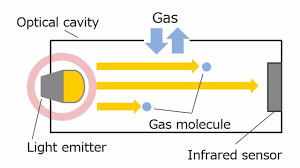
Light emitter of NDIR type CO2 sensor
NDIR detectors are popular for their high accuracy and reliability. As the U.S. National Library of Medicine says that these sensors work by checking the heat energy picked up by CO2 molecules. They can give exact results even at small levels. NDIR sensors are suitable for a wide range of applications from residential to industrial environments, making it a versatile option for integrated environmental monitoring.
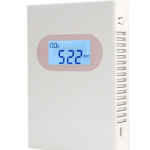
LE-D732
LE-D732 The LE-D732 Carbon Dioxide Air Quality Monitor employs Non-Dispersive Infrared (NDIR) technology to accurately and continuously measure CO2 concentration in real-time, helping to assess indoor air ventilation.This monitor has an LCD screen that displays the current CO2 concentration, accompanied by a 3-color background lighting system indicating present air quality conditions. The device provides a variety of output modes which can allow data to be transmitted via analog 4-20mA streams or the ModBus-RTU RS485 protocol allowing it easily integrated into controllers and other devices through wired connections.
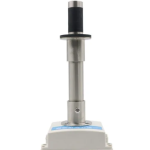
LG401
LG401 Made to measure CO2 in gas vents easily, Duct Type CO2 sensors have a special design. These sensors are easy to use. They have a plug-in design and include a stainless steel air pipe with a flange attachment made for proper connection. In the heart of this thing is something that can measure how much carbon dioxide there is, using top-level test tools. These gas sensors use the Non-Dispersive Infrared (NDIR) trick to measure gas levels accurately. They help make duct systems work better by keeping an eye on the right amount of gases around.
Metal Oxide Semiconductors (MOS) Sensors:
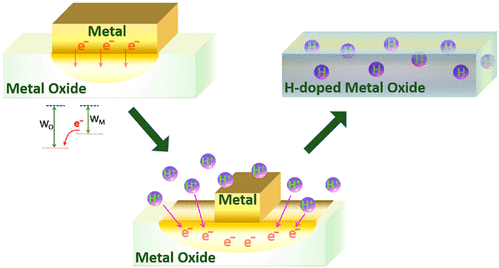
Tunable Hydrogen Doping of Metal Oxide Semiconductors
MOS sensors provide a price-powerful opportunity, mainly in scenarios in which price range concerns are critical. As mentioned via the countrywide Institute of requirements and era (NIST), MOS sensors hit upon modifications in electric conductivity whilst exposed to CO2. While generally less accurate than NDIR sensors, MOS sensors are valuable for specific applications and are suitable for home use or as part of a wider array of sensors.
CO2 Sensor Placement: Optimizing Effectiveness for Maximum Results
Proper placement of CO2 sensors is a important factor in their effectiveness. To ensure correct readings and green air flow manage, Consider the following site selection suggestions:
Dwelling areas: Set up CO2 sensors in living rooms and bedrooms at a height of approximately four to six toes above the floor. This positioning reflects the typical respiratory area of occupants and provides a extra accurate representation of indoor air best.
Lecture rooms/workplaces: Position sensors at seated head height in regions where individuals spend prolonged periods, consisting of desks or workstations. This placement ensures that the sensors capture the exhaled breath of occupants, supplying a dependable evaluation of CO2 degrees in those often occupied spaces.
Commercial areas: In larger business areas, strategically set up sensors uniformly throughout the area, ensuring coverage in high-visitors zones. keep in mind setting sensors close to workstations, assembly rooms, and commonplace areas to obtain a complete understanding of CO2 variations throughout the environment.
Smart Integration: How CO2 Sensors Work with Home Automation Systems
In our technologically advanced era, CO2 sensors seamlessly combine with home automation systems. consistent with the U.S. branch of power, those wise structures adjust ventilation quotes based on real-time CO2 ranges, improving strength efficiency and ensuring a steady deliver of clean air. This intersection of environmental recognition and clever technology marks a substantial step toward sustainable dwelling.